"Unoriginal" was a project built around a provocation:
what can you learn by deliberately imitating someone else?
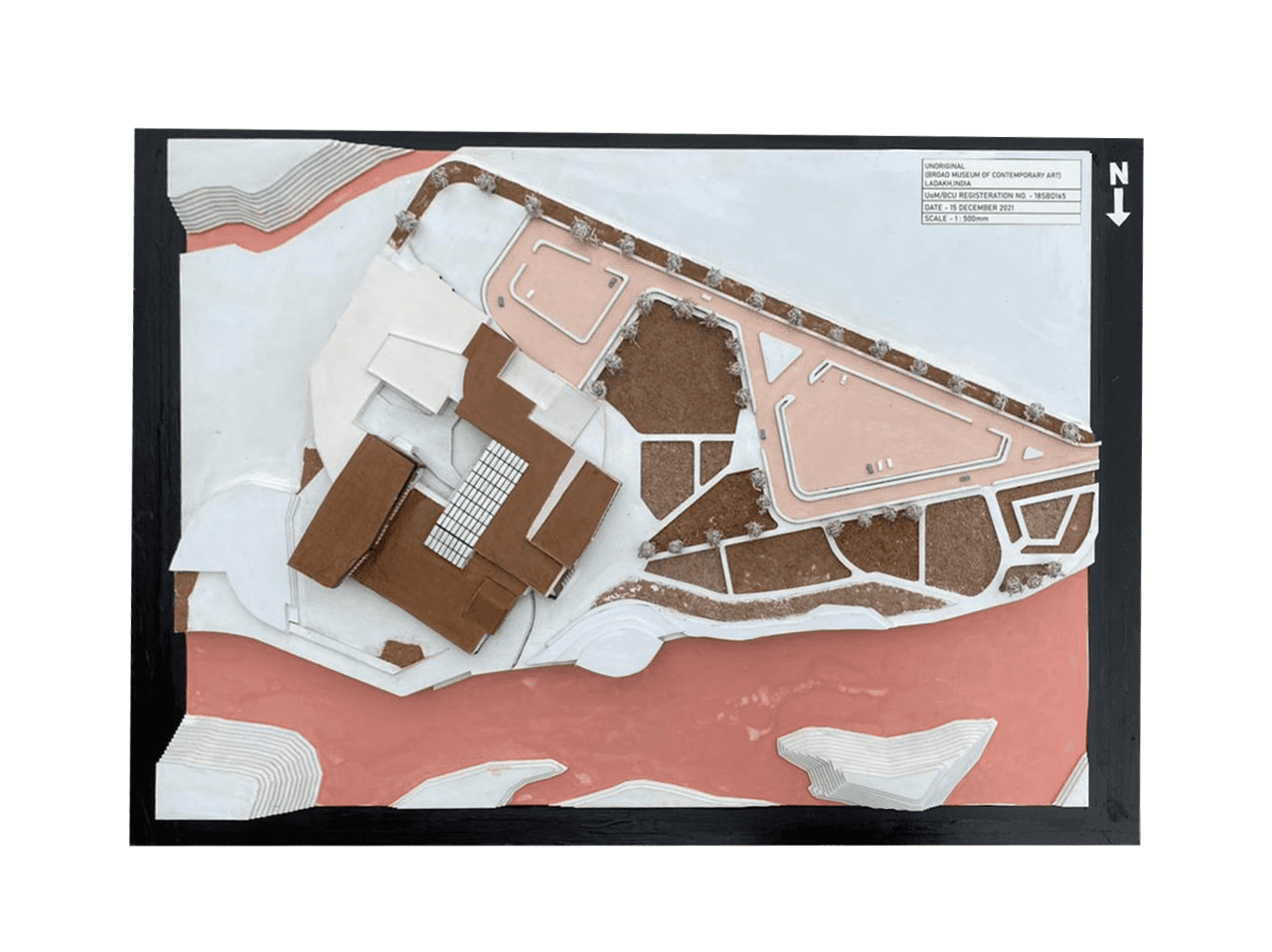
I chose Ben Van Berkel, studied the geometry and thinking behind five of his buildings, and used that as the starting point for a museum sited in Ladakh, a place where culture, identity, and education have been under pressure for decades.
"Unoriginal" was a project built around a provocation:
what can you learn by deliberately imitating someone else?
I chose Ben Van Berkel, studied the geometry and thinking behind five of his buildings, and used that as the starting point for a museum sited in Ladakh, a place where culture, identity, and education have been under pressure for decades.
The project started not with a brief but with a question, around authorship, originality, and how designers build vocabulary.
The first phase was deep research:
I mapped Van Berkel's design language by studying the Erasmus Bridge (how a single asymmetrical pylon could carry both structural and civic meaning), the Theatre Agora (how a faceted skin could make drama spill out beyond the stage), and the Mercedes-Benz Museum (how interlocking ramps could turn circulation into experience). I extracted what I called "prominent lines" from each, the recurring geometries that felt like his signature.
The design brought these two threads together. The form grew from the prominent lines of Van Berkel's work, diagonal, faceted, non-orthogonal, but was grounded in local material logic: geopolymer cement, brick, glass that manages solar gain.
The space was built around the idea that a museum in Ladakh couldn't just be a gallery, it needed to be a library, a creative learning center, an auditorium, a place for weekly workshops. A space that gave people a reason to come back.
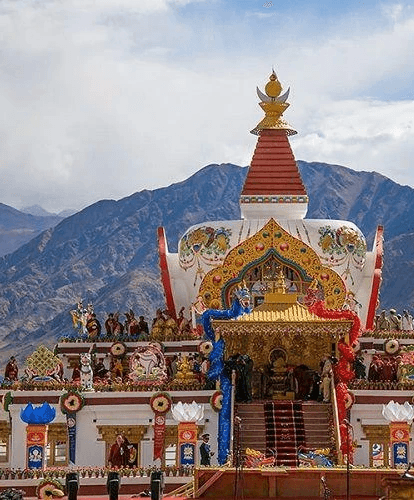
The second phase was site: I chose Ladakh because it sat at an intersection of things I cared about: a region with a rich cultural identity, a fractured political context, an extreme climate, and a real gap in educational infrastructure. I spent time understanding rammed earth and passive solar construction, the techniques SECMOL had developed there, because any building that ignored the -40°C winters or the 300 sunny days a year wasn't really a Ladakhi building.
The second phase was site: I chose Ladakh because it sat at an intersection of things I cared about: a region with a rich cultural identity, a fractured political context, an extreme climate, and a real gap in educational infrastructure. I spent time understanding rammed earth and passive solar construction, the techniques SECMOL had developed there, because any building that ignored the -40°C winters or the 300 sunny days a year wasn't really a Ladakhi building.